Latest News:

- ABOUT RNBGU

The RNB Global University has been established by act no 20 of 2015 passed by the Rajasthan Vidhan Sabha and notified by state of Rajasthan on 27/04/2015. The degrees which will be awarded by RNB Global University would be recognized by University Grants Commission (UGC).
- ADMISSIONS

RNB Global University accepts admission applications to a wide variety of Undergraduate and Postgraduate degree programs. RNBGU welcomes applications from all over the world & offer a venue to benefit from studying with us.
- Schools
- ACADEMICS

RNB Global University teaches not only what to think, but even how in order to overcome challenges & lead others. RNBGU brings together highly experienced & qualified Faculties and talented students from throughout the county at one place for an exceptional ...
- Strategic Plan and Deployment Documents
- Faculties and Schools
- Curriculum Design and Policy
- Syllabus
- Programme Outcomes
- Course Outcomes
- Examination and Evaluation
- Academic Calendar 2024-2025
- Board of Studies
- Academic Council
- Faculty Members
- Policies
- Committees
- ICT-Enabled Facilities
- Sanctioned Teaching Post
- MOOC Courses
- Indian Knowledge System (IKS)
- Gender Cell
- Teaching Learning Pedagogy
- NEP 2020 Implementation
- Teaching Outcome (Attainment)
- PROGRAMS
Coming Soon
- INFRASTRUCTURE
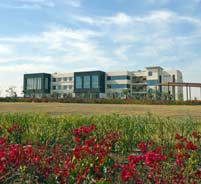
We believe that a clean, green and a pollution free environment provides a pristine backdrop for an effective learning experience. We have therefore left no stone unturned in the development of a green ecosystem to provide enrichment to the mind, heart and soul of ...
- Research & Incubation

We believe that a clean, green and a pollution free environment provides a pristine backdrop for an effective learning experience. We have therefore left no stone unturned in the development of a green ecosystem to provide enrichment to the mind, heart and soul of ...
- Library

We believe that a clean, green and a pollution free environment provides a pristine backdrop for an effective learning experience. We have therefore left no stone unturned in the development of a green ecosystem to provide enrichment to the mind, heart and soul of ...
- ERP Login

- ABOUT RNBGU
- ADMISSIONS
- Schools
- ACADEMICS
- Strategic Plan and Deployment Documents
- Faculties and Schools
- Curriculum Design and Policy
- Syllabus
- Programme Outcomes
- Course Outcomes
- Examination and Evaluation
- Academic Calendar 2024-2025
- Board of Studies
- Academic Council
- Faculty Members
- Policies
- Committees
- ICT-Enabled Facilities
- Sanctioned Teaching Post
- MOOC Courses
- Indian Knowledge System (IKS)
- Gender Cell
- Teaching Learning Pedagogy
- NEP 2020 Implementation
- Teaching Outcome (Attainment)
- PROGRAMS
- Under Graduate Programs
- B.A. (Bachelor of Arts)
- B.Com. - 2026-27
- B.Com . (Hons) - 2026-27
- BBA (Marketing) - 2026-27
- BBA (Finance) - 2026-27
- BBA (Digital & Social Media Marketing) - 2026-27
- BBA (Human Resource Management) - 2026-27
- BBA (Foreign Trade) - 2026-27
- BBA (Bachelor of Business Administration) - 2026-27
- B.Tech. (Computer Science And Engineering)
- B.Tech. (CSE) Spl In Cyber Security & Forensics
- B.Tech. (CSE) Spl In Data Science & Analytics
- B.Tech. (CSE) Spl In AI & Machine Learning
- B.Sc. (Bachelor Of Science) - 2026-27
- B.Sc. (Biotechnology) - 2026-27
- B.Sc. (Hons) Agriculture (Rajasthan Domicile)
- B.Sc. (Hons) Agriculture (Outside Rajasthan Student)
- BBA + LL.B. 2026-27
- B.A. + LL.B. 2026-27
- BCA (Bachelor of Computer Application)
- LL.B. 2026-27
- Post Graduate Programs
- M.A. (English) - 2026-27
- M.A. (Economics) - 2026-27
- M.A. (Political Science) - 2026-27
- M.A. (History) - 2026-27
- M.A. (Public Administration) - 2026-27
- MBA - 2026-27
- MBA (Marketing) - 2026-27
- MBA (Finance) - 2026-27
- MBA (Digital Marketing & E-Business) - 2026-27
- MBA (Family Business & Entrepreneurship) - 2026-27
- MBA (Agriculture Business Management) - 2026-27
- M.Sc. (Biotechnology) - 2025-26
- M.Sc (Agronomy) - 2026-27
- M.Sc (Genetics & Plant Breeding) - 2026-27
- M.Sc (Horticulture) - 2026-27
- LL.M 2026-27
- MCA (Master of Computer Applications) - 2026-27
- Doctoral Programs
- Under Graduate Programs
- INFRASTRUCTURE
- Research & Incubation
- Library
- ERP Login
- NIRF
- Placements
- Campus Life
- Media
- Blog
- Career
- Contact Us
- Student Reviews
- NAAC
- Anti-Ragging
Recent Posts




Blog
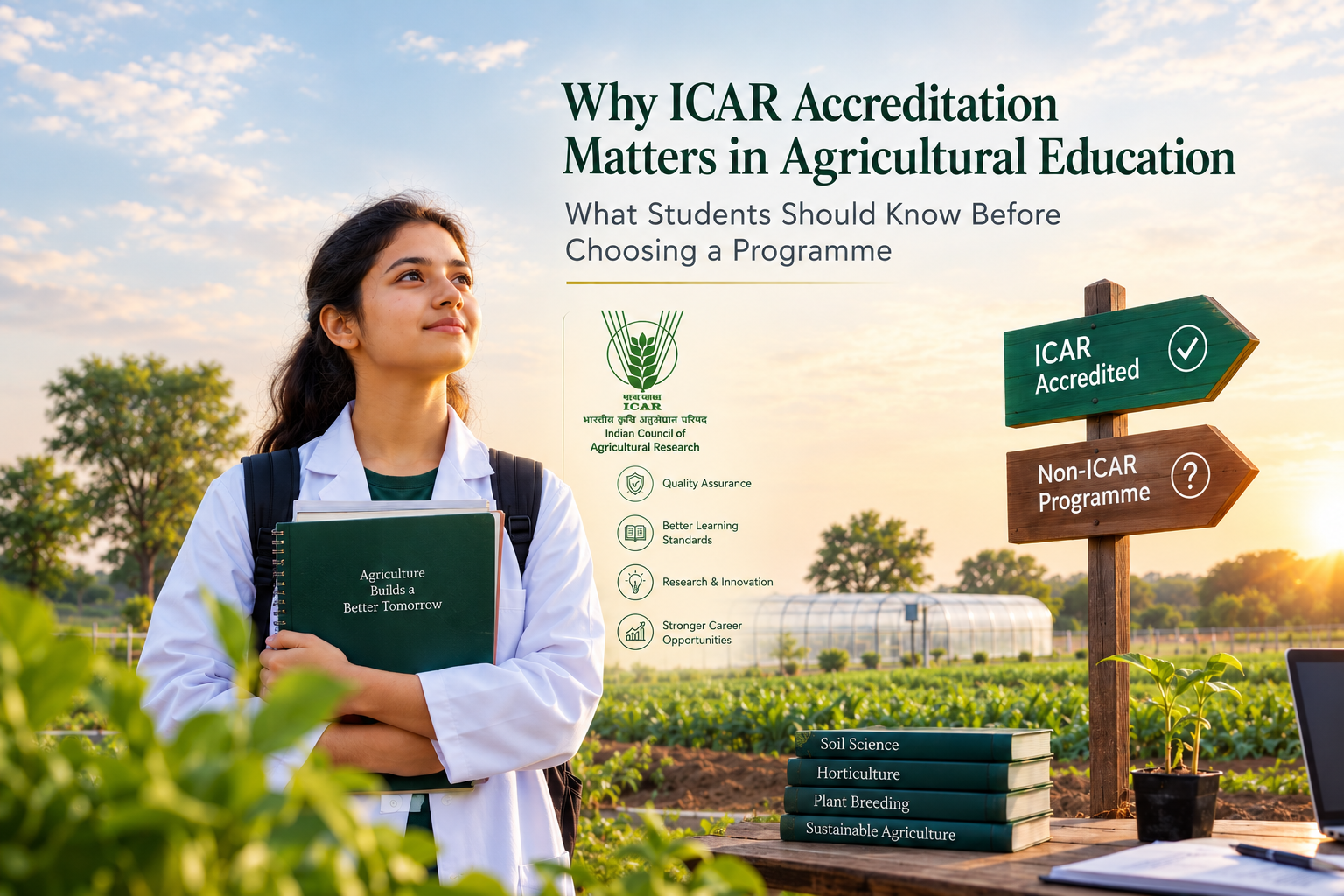
Why ICAR Accreditation Matters in Agricultural Education: What Students Should Know Before Choosing a Agriculture P
Oct 12, 2026
Posted by : Admin
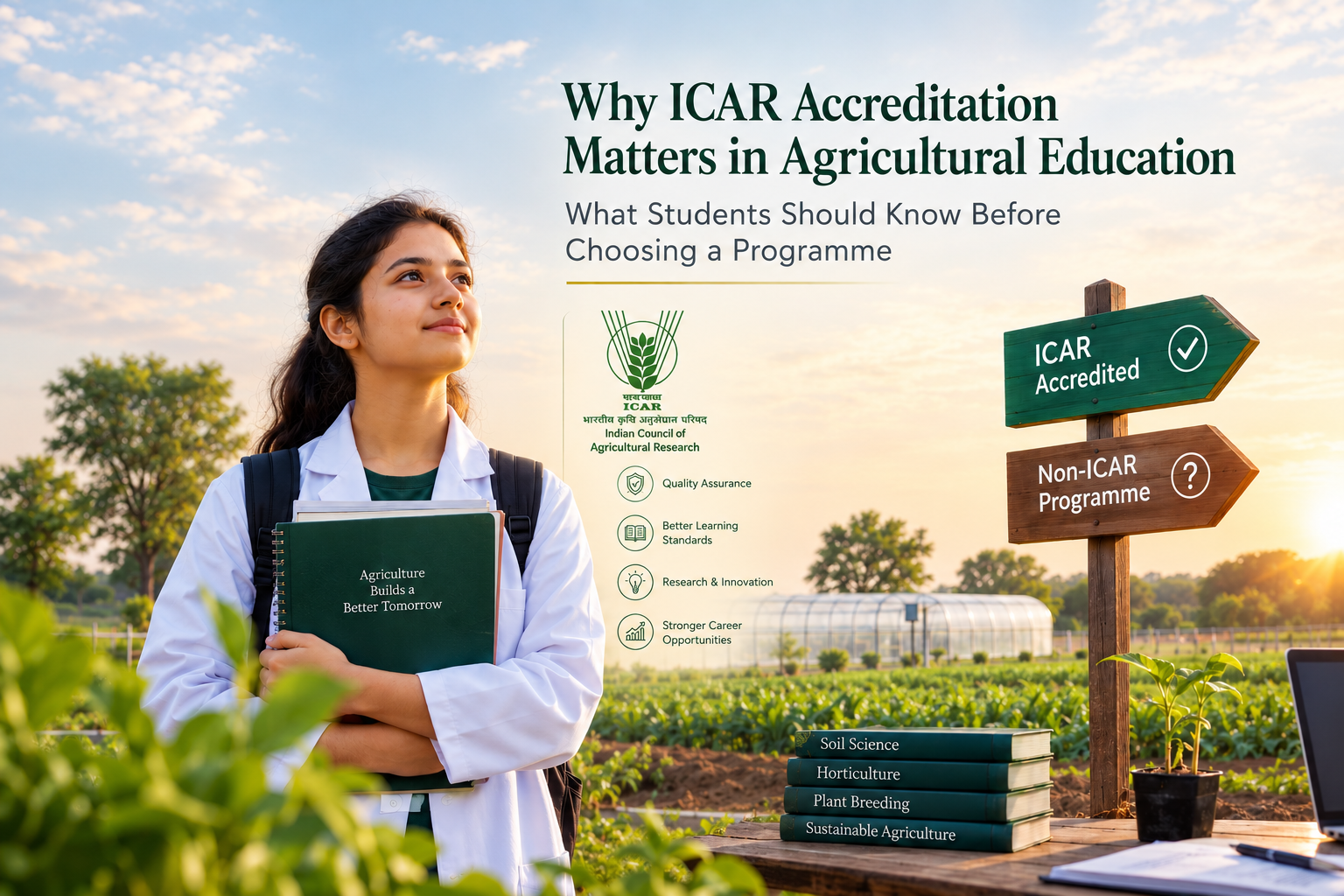
Why ICAR Accreditation Matters in Agricultural Education: What Students Should Know Before Choosing a Agriculture Program:
Agriculture is no longer limited to traditional farming practices. Today, it is a multidisciplinary field connecting science, technology, business, sustainability, biotechnology, food systems, climate resilience and rural development. As the sector evolves, agricultural education is also becoming more specialised and industry-oriented.
For students planning to build a career in agriculture, choosing the right university and program is therefore an important decision. Beyond checking the course duration, fees and campus facilities, students should also understand the academic framework, curriculum, practical exposure and quality-assurance status of the program.
One term that frequently appears while researching agricultural education in India is ICAR accreditation.
But what does ICAR accreditation actually mean? Why is it important? And does studying an agriculture program without ICAR accreditation automatically make the degree invalid?
The answers require a clear distinction between university recognition, program accreditation and academic quality assurance.
What Is ICAR and Why Is It Important in Agricultural Education?
The Indian Council of Agricultural Research (ICAR) is a major national organisation associated with agricultural research and higher agricultural education in India. Through its Agricultural Education Division and National Agricultural Education Accreditation Board (NAEAB), ICAR works toward strengthening the quality and relevance of higher agricultural education.
ICAR's accreditation framework is designed to assess agricultural universities, colleges and program against defined academic and quality standards.
In simple terms, accreditation provides an additional layer of quality assurance.
It helps students look beyond the name of a degree and examine whether an agricultural program has been evaluated against discipline-specific academic expectations.
However, one important distinction should be understood: ICAR accreditation is not the same as university recognition. ICAR itself describes accreditation as a quality-assurance mechanism rather than an affiliation or permission to establish an institution or program.
This distinction is particularly important when students compare different agriculture colleges and universities.
Why Does ICAR Accreditation Matter to Agriculture Students?
Agriculture is a practical and science-driven discipline. A strong agriculture program needs more than classroom lectures. Students require exposure to laboratories, agricultural fields, crop production, soil and plant sciences, farm management, research methods, technology and real-world agricultural challenges.
ICAR accreditation can be relevant because it reflects an external quality-assurance process focused specifically on agricultural education.
For students, this can offer several academic advantages.
1. Greater Confidence in Academic Standards
When choosing a professional program, students naturally want confidence that the curriculum and academic environment are designed around established expectations.
ICAR's accreditation process evaluates agricultural educational institutions and program against defined standards. This gives students another meaningful factor to consider while comparing institutions.
Instead of selecting a program only because of its location or popularity, students can examine its academic quality indicators as part of a broader decision-making process.
2. A Curriculum Connected to Agricultural Education Standards
Modern agriculture requires knowledge across multiple areas.
Students may study subjects related to agronomy, soil science, horticulture, genetics and plant breeding, agricultural economics, entomology, plant pathology, agricultural engineering, farm management and emerging technologies.
A structured curriculum helps students develop a broad foundation before moving toward specialised interests.
For an aspiring agriculture professional, this academic foundation can become important for higher education, research, entrepreneurship and employment-oriented career pathways.
3. Stronger Focus on Practical Learning
Agriculture cannot be understood completely through textbooks.
A student may learn about crop production in a classroom, but understanding how crops respond to soil conditions, weather, irrigation, pests and field-level management requires practical exposure.
Quality agricultural education should therefore combine theory with laboratory work, field activities, demonstrations, farm visits, projects and experiential learning.
This is particularly valuable in an era when agriculture is becoming increasingly technology-driven and data-informed.
4. Better Understanding of Research and Innovation
Agriculture faces complex challenges, including climate variability, water management, soil degradation, food security, crop productivity and sustainable resource use.
Students entering the field need to understand not only existing agricultural practices but also how research contributes to solving emerging problems.
An academic environment that encourages experimentation, scientific thinking and research exposure can help students develop the mindset required for modern agricultural careers.
What About Agriculture Program Without ICAR Accreditation?
This is where students often encounter confusion.
A program without ICAR accreditation should not automatically be described as an invalid degree.
ICAR itself makes an important distinction between accreditation and recognition. Accreditation is a quality-assurance mechanism and is not, by itself, the legal recognition or affiliation of an institution.
The recognition and validity of a degree depend on the applicable higher-education framework, the status of the university, the program, relevant regulations and the requirements of the organisation or authority concerned.
Therefore, students should avoid making a decision based on a single label.
If an agriculture program does not have ICAR accreditation, students should investigate other important questions:
- Is the university legally established and appropriately recognized?
- Is the degree awarded under the applicable UGC framework?
- What is the status of the specific program?
- What curriculum does the institution follow?
- Does the program provide adequate practical and laboratory exposure?
- Are agricultural faculty members appropriately qualified?
- What opportunities exist for internships, fieldwork and research?
- What are the eligibility requirements for the higher-education or employment pathways the student is targeting?
- Do any particular government recruitment, professional or higher-study pathways specify additional eligibility conditions?
These questions provide a much more complete picture.
ICAR-Accredited vs. Non-ICAR Program: What Should Students Compare?
The comparison should not simply be treated as “valid versus invalid.”
Instead, students can look at the difference from an academic quality and opportunity perspective.
|
Factor |
ICAR-Accredited Program |
Program Without ICAR Accreditation |
|
Quality assurance |
Evaluated through the ICAR accreditation framework |
Students should examine other institutional and programme-level quality indicators |
|
Agriculture-specific standards |
ICAR accreditation provides an agriculture-specific quality benchmark |
Requires closer independent evaluation by the student |
|
Curriculum |
Should be examined in relation to the accredited program and applicable standards |
Check curriculum, academic structure and relevance carefully |
|
Practical exposure |
Evaluate the actual facilities and field-based learning offered |
Evaluate practical facilities independently |
|
Degree validity |
Depends on the university and applicable regulatory framework, not ICAR accreditation alone |
Depends on the university and applicable regulatory framework |
|
Career eligibility |
Depends on the specific job, organisation and applicable rules |
Depends on the specific job, organisation and applicable rules |
|
Higher studies |
Check the eligibility requirements of the institution/program being targeted |
Check the eligibility requirements of the institution/program being targeted |
This comparison highlights an important point: students should evaluate the complete academic ecosystem rather than relying on a single accreditation label.
Why This Matters for Future Career Planning
Agriculture graduates today can explore diverse career directions.
Depending on their qualifications, interests and eligibility, students may move toward areas such as:
- Agricultural research
- Agribusiness and agricultural management
- Crop production
- Horticulture
- Plant breeding and genetics
- Soil and environmental sciences
- Food and agri-processing
- Agricultural technology
- Farm management
- Rural development
- Banking and financial services related to agriculture
- Agricultural entrepreneurship
- Government and public-sector opportunities
- Higher education and research
Each career pathway can have its own eligibility requirements.
For example, a student preparing for postgraduate education may need to meet the eligibility criteria specified by the destination institution. Similarly, recruitment organisations may prescribe particular degrees, subjects, accreditation requirements or other qualifications for specific positions.
This is why students should always check the current eligibility rules for their intended career or higher-study pathway instead of assuming that one accreditation automatically guarantees every future opportunity.
The RNBGU Approach to Agricultural Education
At RNB Global University, Bikaner, agricultural education is designed to combine academic learning with practical exposure.
The university's B.Sc. (Hons.) Agriculture program is currently presented by RNBGU as an ICAR-accredited program. The university also highlights practical and experiential learning through agricultural facilities, laboratories, farm visits, projects, demonstrations and exposure to areas such as crop production, organic farming, floriculture, medicinal plants, nursery raising and horticulture.
Such an approach recognises an important reality of agricultural education: students need opportunities to connect what they learn in the classroom with real agricultural environments.
With agriculture becoming increasingly connected to science, technology, sustainability and entrepreneurship, this combination of academic knowledge and practical experience can help students develop a broader understanding of the sector.
What Should Students Check Before Taking Admission?
Before choosing an agriculture program, students should create a simple checklist.
Check the University's Recognition
First, understand the legal and regulatory status of the university and the degree it awards.
Check Program-Specific Accreditation
Do not stop at the university name. Check whether the specific agriculture program is covered by the stated accreditation.
Review the Curriculum
Look at the subjects, practical components, laboratory work, field training, projects and opportunities for specialisation.
Evaluate Faculty and Infrastructure
Agriculture is a practical discipline. Examine the availability of qualified faculty, laboratories, agricultural farms and other learning resources.
Explore Experiential Learning
Ask about field visits, internships, demonstrations, research projects and industry exposure.
Check Future Eligibility
If your goal is government employment, postgraduate study, research or a specialised professional pathway, review the current eligibility conditions before enrolling.
Conclusion
Choosing an agriculture program is a decision that can influence a student's academic foundation and future career direction.
ICAR accreditation can be an important quality indicator because it represents an agriculture-specific accreditation framework. At the same time, it should not be confused with university recognition or treated as the only factor determining the validity of a degree.
The smarter approach is to look at the complete picture: recognition, accreditation, curriculum, faculty, infrastructure, practical learning, research opportunities and future eligibility requirements.
For students aspiring to build a meaningful career in agriculture, the goal should not simply be to earn a degree. It should be to gain the scientific knowledge, practical experience, problem-solving ability and professional exposure needed to contribute to the future of agriculture.
At RNB Global University, Bikaner, the B.Sc. (Hons.) Agriculture program brings together academic learning, practical exposure and an ICAR-accredited academic framework—creating an environment where students can explore agriculture not merely as a traditional field, but as a modern, multidisciplinary and innovation-driven profession.
Frequently Asked Questions
Is ICAR accreditation the same as UGC recognition?
No. They serve different purposes. UGC-related recognition concerns the higher-education and degree framework, while ICAR accreditation relates specifically to quality assurance in agricultural education.
Is an agriculture degree without ICAR accreditation automatically invalid?
No. The absence of ICAR accreditation alone does not establish that a degree is invalid. Students should examine the university's recognition status, program status and the eligibility requirements applicable to their intended career or higher-study pathway.
Why should students prefer an ICAR-accredited agriculture program?
ICAR accreditation provides an agriculture-specific quality-assurance benchmark and can therefore be an important factor when comparing agricultural program.
Is ICAR accreditation important for higher studies?
It can be relevant depending on the specific higher-study program and its eligibility requirements. Students should always check the current admission criteria of the institution they plan to apply to.
Is RNBGU's B.Sc. (Hons.) Agriculture program ICAR-accredited?
RNB Global University's current program page states that its B.Sc. (Hons.) Agriculture program is accredited by ICAR.
